Brain Mapping
Brain Mapping Mental Health and Addiction
Unlock Your Brain’s Healing Potential
Your brain holds the key to recovery. At VCAT Treatment Center, we use Brain Mapping Mental Health and Addiction techniques combined with neuropathway therapy (VCAT) to personalize treatment. Monitor your brain. Heal your life.
Real‑Time Brain Mapping for Mental Health and Addiction
Brain Mapping Mental Health and Addiction delivers real‑time diagnostics by measuring, recording, and analyzing electrical activity in the brain. This advanced approach helps identify dysfunctions that affect decision‑making, emotional regulation, memory, and impulse control—areas often disrupted by mental illness and addiction.
Why Brain Mapping Matters
A healthy brain supports healthy behavior. When the brain is dysfunctional, it can work against recovery. Brain Mapping Mental Health and Addiction provides scientific insights that guide effective treatment, helping patients overcome challenges caused by mental illness and substance use disorders.
Neuroscience‑Based Treatment at VCAT
VCAT Treatment Center utilizes neuroscience and brain‑based therapies to manage complex mental health and addiction cases. By focusing on Brain Mapping Mental Health and Addiction, we provide data‑driven insights that personalize care and improve recovery outcomes.
Data‑Driven Healing
We believe information and understanding are central to lasting recovery. Unlike traditional methods that rely on guesswork, our approach uses quantitative data to uncover the root causes of psychological and substance use disorders.
How Brain Mapping Works
Through Brain Mapping Mental Health and Addiction, we measure, record, and analyze brain activity in real time. This process reveals patterns that guide targeted interventions, empowering patients to regain control and achieve long‑term healing.

What is Brain Mapping?
Brain mapping is a cutting-edge, evidence-based practice that allows us to accurately diagnose psychological disorders and addictions by identifying dysregulated brain areas linked to mental illnesses or addictions.
Real-time brain mapping is one of the evaluations used at our Psychological Assessment Center. It’s been proven to be highly effective for treating mental health and substance use disorders. The brain assessment helps us provide the correction you need to recover and reclaim your life.
At VCAT Treatment Center, we use brain-based quantitative electroencephalogram (qEEG) assessments to derive quantitative patterns that may correspond to cognitive deficits and/or diagnostic information. This is achieved by analyzing the electrical activity of the brain.
qEEG is an all-inclusive, computer-generated diagnostic tool that is key to the mental illnesses and addiction treatment program at VCAT Treatment Center.
Our monitoring equipment and instruments are a precise, painless, non-invasive way to pick up and understand the brain mechanisms that affect a client’s decision-making, impulse control, emotional regulation, and reaction.
A quantitative electroencephalogram gives us a virtual map of your brain. Using this information, our team of experts at VCAT Treatment Center can assess the effects of mental health and/or substance use disorders on your neural networks. We can then prescribe the best individualized treatment plan to address your addiction or mental illness at its core.
How Does Brain Mapping Work?
Your brain communicates by sending electrical impulses (brain waves) via neurons. It’s like an intricate electrical power grid. Think of neurons as “hubs” that network and connect the various workings of the brain—impacting essential cognitive functions like decision-making, memory, and emotional processing.
When you have mental health and/or substance use disorders, the electrical activity in your brain is typically dysregulated (deficient or excessive). The brain sites might have communication issues. These adverse effects may manifest as symptoms such as attention deficiency, memory loss, anxiety, and depression, among other negative psychological issues.
A quantitative electroencephalogram (qEEG) works by picking up and mapping the bandwidth and frequency of abnormalities causing mental health disorders or addictions. It gives us a picture of how your brain is functioning in real time—allowing us to identify atypical results.

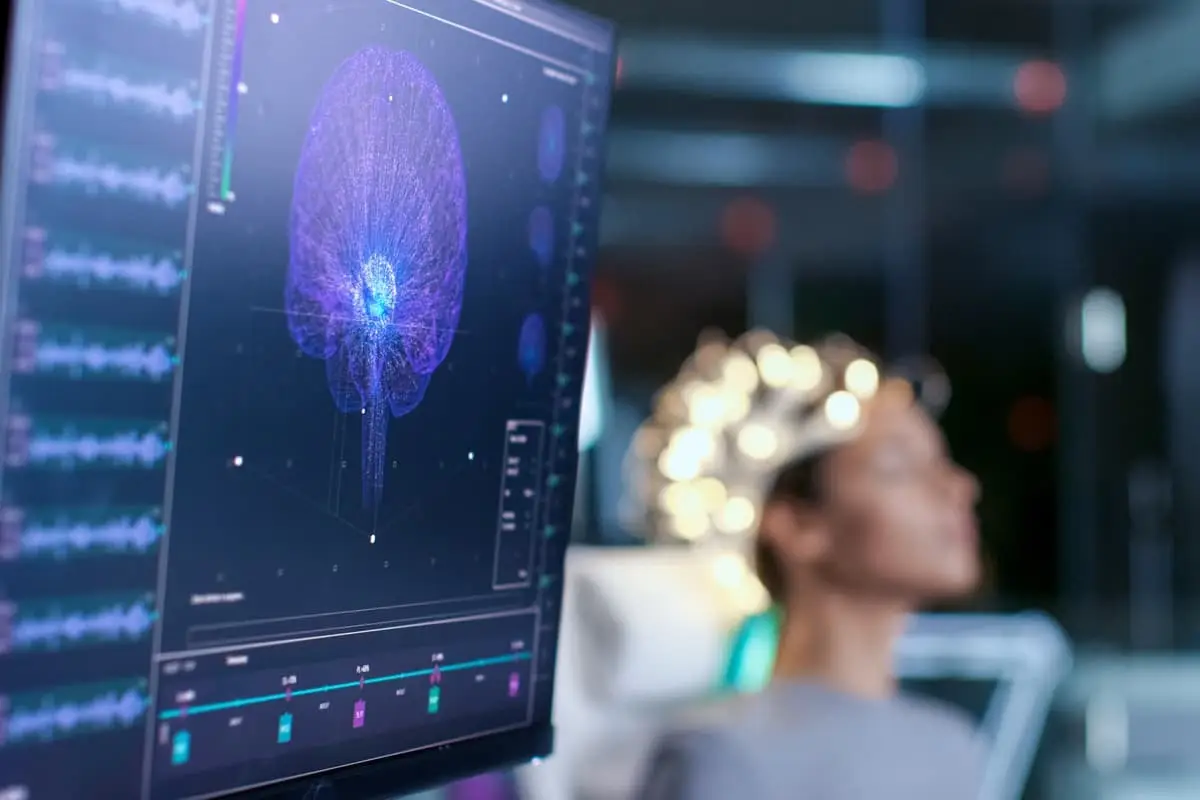
Brain mapping is a relatively quick, non-invasive, and safe procedure. You’ll be asked to sit comfortably as a specialized sensor cap is placed on your scalp to monitor and measure neuron oscillations (brainwaves)—including delta, theta, alpha, and beta waves.
Combined with our state-of-the-art brain-mapping computer technology, our experts at VCAT Treatment Center are able to create topographic color-coded maps of your brain’s activity.
A report is generated based on the recorded data in comparison to normal controls. Using this as a reference, we can locate abnormalities that may be the underlying causes of your struggles with mental health and substance use disorders.
Brain mapping may be used to measure progress throughout the course of your treatment program at the VCAT Treatment Center.
What are the Benefits of Brain Mapping?
Your brain needs maintenance to ensure the billions of neurons are firing as they should. This is especially important after your brain’s chemistry and activity have been adversely affected by repeated drug and alcohol use.
Brain mapping “looks under the hood” to determine what needs to be addressed to achieve recovery with a minimal probability of relapse.
The qEEG assessments used at VCAT Treatment Center leverage non-invasive, safe, and painless brain imaging technology to measure the relationship between the structure and function of the brain. Brain mapping can help people with mental health and/or substance use disorders in several ways, including:
- Reveal the quality of communication between areas/regions of the brain
- Spot brain injuries
- Point to irregular brainwave patterns
- Help in the diagnosis of cognitive or psychiatric conditions. This includes co-occurring disorders that can cover up or disguise signs/symptoms of one another—making it difficult to accurately diagnose them using traditional methods
- Identify areas with too little or too much brain activity
- Determine the most efficient and effective way to address addiction and mental illnesses
- Help predict response to treatment
Brain mapping gives us the right data to determine the easiest and best path to achieve your health and life goals. This may include breaking bad habits linked to your drug use, improving focus, or achieving peak performance. It’s an important step in breaking free from the shackles of mental illnesses and/or addiction.
Brain Mapping at VCAT Treatment Center
VCAT Treatment Center is one of the industry leaders in brain mapping and qEEG-guided addiction and mental health treatment.
We rely on precise scientific measurements and interventions such as qEEG brain mapping to get to the root of mental health and substance use disorders. Our highly qualified professionals use data from brain mapping tools to formulate comprehensive, personalized treatment plans.
Brain mapping is an excellent place to start if you’re struggling with addiction and/or mental health disorders. It unearths the underlying root causes of your health issues. Along with our neuroscience/brain-based, behavioral, and alternative therapies, brain mapping can help restore healthy brain functioning—helping you achieve sustained recovery.

Ready to start your journey to long-lasting recovery and improved quality of life? Contact the VCAT Treatment Center today.
Whether you have a problematic history of addiction and mental health issues—or it’s your first time seeking help, our cutting-edge, brain-based treatment program can work for you. Give us a call to get started on the road to recovery!